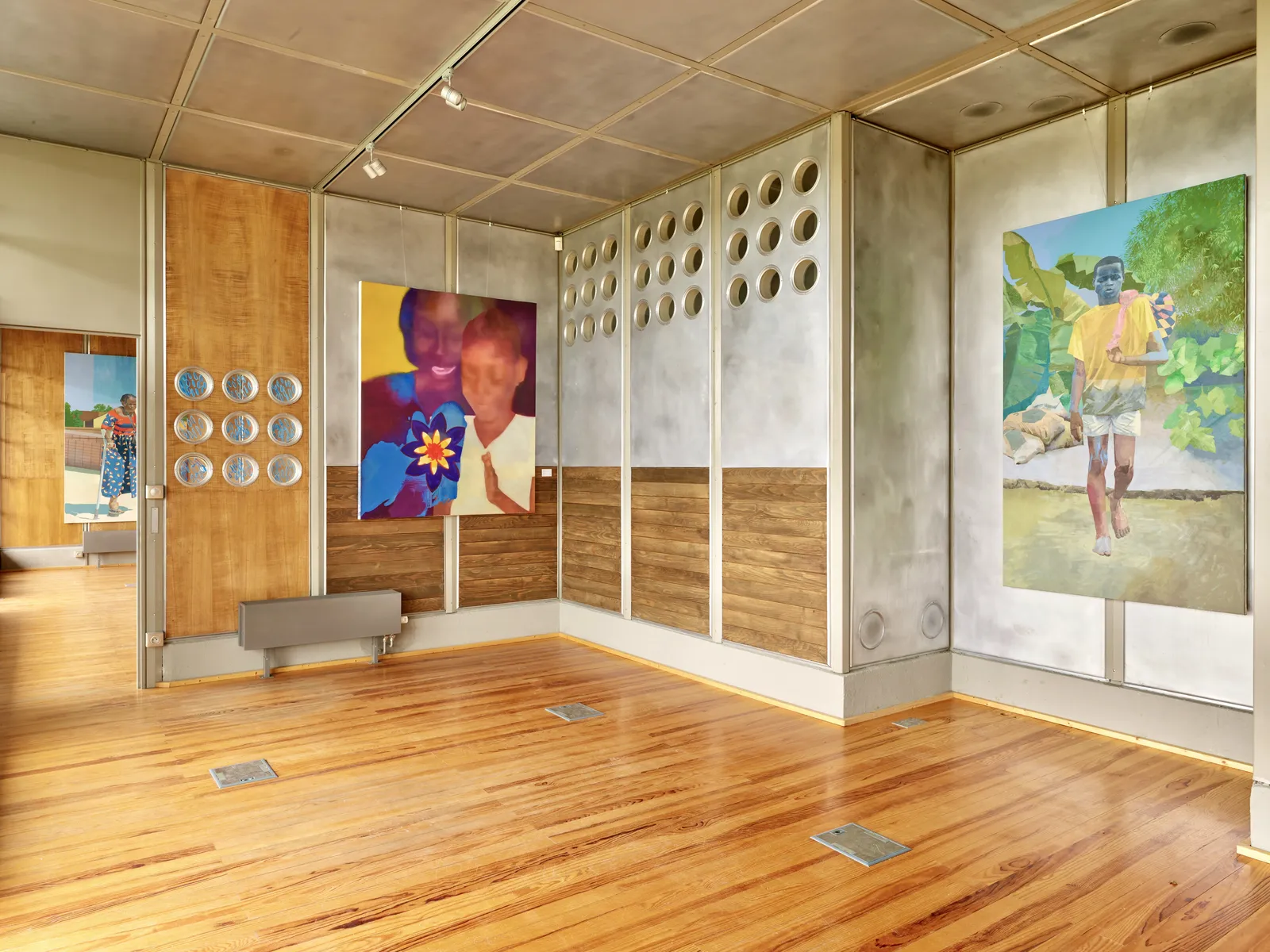
At Galerie Nathan Chiche, the dialogue between David Mbuyi and Maria Adjovi takes shape in a place already charged with memory: a former school designed by Jean Prouvé, a place of transmission that has today become a plastic territory and one of sensuous revelation. In this architecture conceived for awakening, their works open a field of perception in which painting becomes at once language, prayer and act of presence. Each in their own way reactivates disjointed images: in David Mbuyi, the memory of an image seen, photographed, then transfigured by painting; in Maria Adjovi, images of the past that return as persistent figures of the soul. Both remind us, each in their way, that images never sleep.
Two pictorial voices, distinct but secretly attuned, here question what remains, the gaze of childhood, the persistences of memory, the survival of forms. One explores the visible in movement, catches the instant in its impulse, unfolds colour as a living energy. The other sculpts the invisible within the motionless, makes of the face an interior sanctuary and of the gaze a silent prayer.
In David Mbuyi, painting is traversed by a gaze that does not judge but discovers, catches, seizes: a child's gaze, in the strong sense, that is, a first gaze, free of any prejudice, open to wonder as to disquiet. He does not paint memories; he paints what the eye recorded in a flash, like an interior photograph. Bodies are caught in their movement, their posture, never inert. They inhabit space, cross it, sometimes merge into it. They are figures in becoming, strained towards a world they question more than they dominate.
Once transposed onto the canvas, the face is no longer a fixed figure. It widens, wavers, extends into the pictorial space. David Mbuyi introduces a dynamic in which the surface seems unable to contain the impulse of the subject represented. There is overflow, transgression, as if the portrait sought to exceed its own frame. Painting then becomes a place where visual memory is rewritten. What the gaze fixed, the hand recomposes. What the lens seized, the pictorial gesture reactivates. As Georges Didi-Huberman writes: “To see is always to see through. Through time, through gestures, through losses.” In David Mbuyi, painting performs precisely this work of the gaze through: through the initial image, through memory, through matter. It is not memory that sleeps; it is the image that keeps watch.
He builds a body of work intensely inhabited by vegetation, not as decor but as matrix. Foliage, brilliant greens, pictorial arborescences unfold across his canvases with the vitality of a world in germination. In his hands nature is alive, it breathes, it surges. It does not frame the subject; it is its extension. Vegetation is memory and energy, rootedness and expansion. Colour, for him, is profusion. It is not applied: it expresses itself. Intense greens, solar reds, almost liquid yellows organise themselves in an organic, non-geometric logic. In his canvases there is a sensation of flow: everything is crossed by a vital force, a founding energy.
Maria Adjovi, in perfect counterpoint, settles her painting into a ritual slowness. It is not movement that interests her but interior vibration. Each portrait is a presence. These are faces that offer themselves not to narrative but to meditation. The gaze she paints is not descriptive, it is initiatory. It holds a secret, a memory, sometimes a wound. And it looks at us, not to be seen but to be recognised.
Her painting is profoundly spiritual, yet never dogmatic. It draws on a silent iconography, on a mystical interiority that exceeds the religious. Each canvas becomes a zone of recollection. The colours, vivid at first, fill little by little with opacity. They are layers, veils, strata: as though light were passing through a succession of skins. There is a density here that is not heaviness but depth, a call to slowness, to listening, to introspection. These portraits fix us like silent sentinels, charged with a gaze that never goes out.
In Maria Adjovi the maternal figure is omnipresent, but it never gives itself frontally. It is in the shape of the face, in the texture of the paint, in the silence of the eyes. It is not an image, it is a presence. Spirituality in her work is not a posture: it is the very space in which the work is elaborated. A spirituality of memory, of transmission, of care. Maria Adjovi does not paint in order to represent. She paints in order to bind. “I say that identity opens in relation, not in the solitude of being,” wrote Édouard Glissant. It is within this poetics of relation that her work is inscribed: a painting that speaks to the absent, that keeps, that watches.
Between the two artists a silent, vibrant conversation settles. Where David Mbuyi explores exteriorities, bodies under tension, inhabited landscapes, chromatic pulsations, Maria Adjovi digs into interiorities: gazes closed upon an inner world, colours that absorb light, faces like reliquaries. This exhibition does not set two aesthetics against one another: it weaves a common weft between gesture and presence, light and shadow, vital impulse and the sacred. It settles painting in a fertile in-between: between the image as trace and the image as threshold. For here, more than anywhere, images never sleep.
Receive the selection of works from this exhibition.
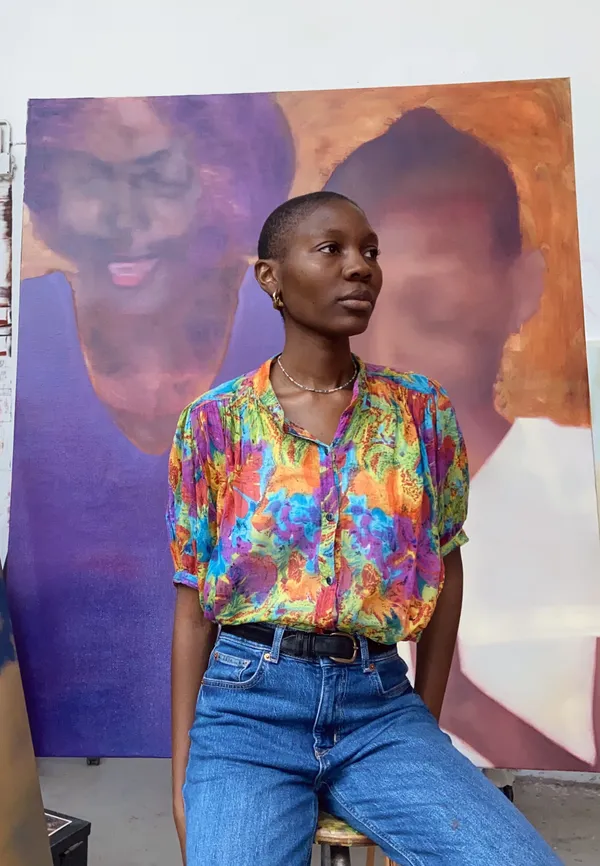
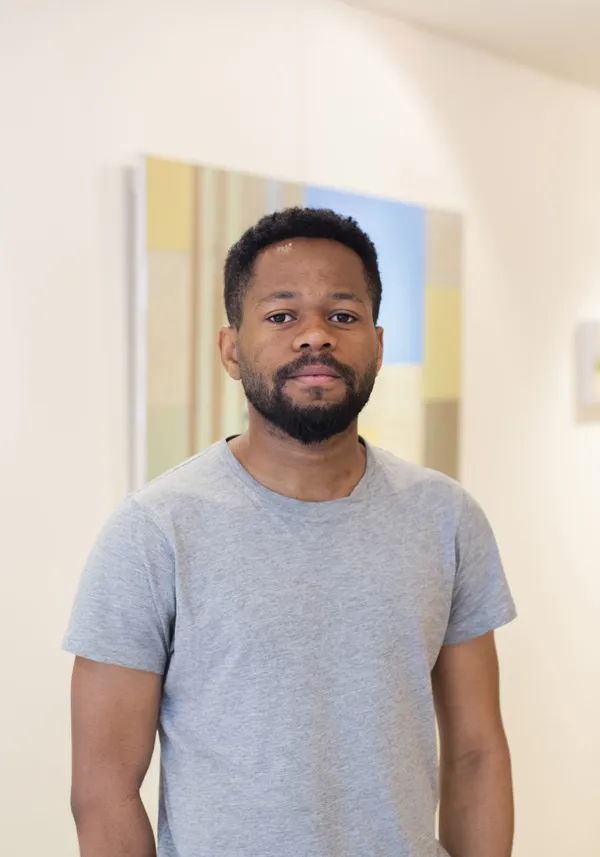
Artists in this exhibition2
What was written about it3
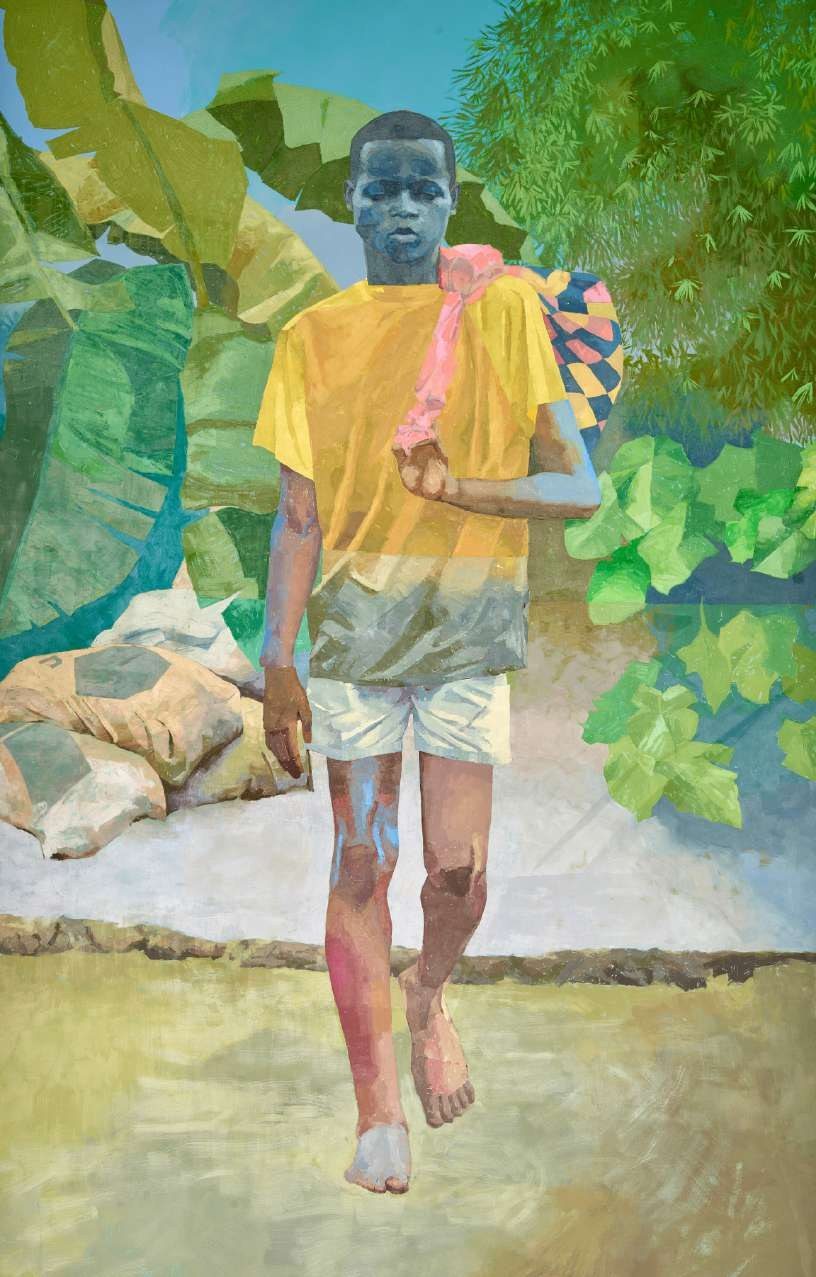
A Montpellier, le MoCo retrace l’aventure de deux écoles d’art, de leurs professeurs et élèves
Read at the publisher ↗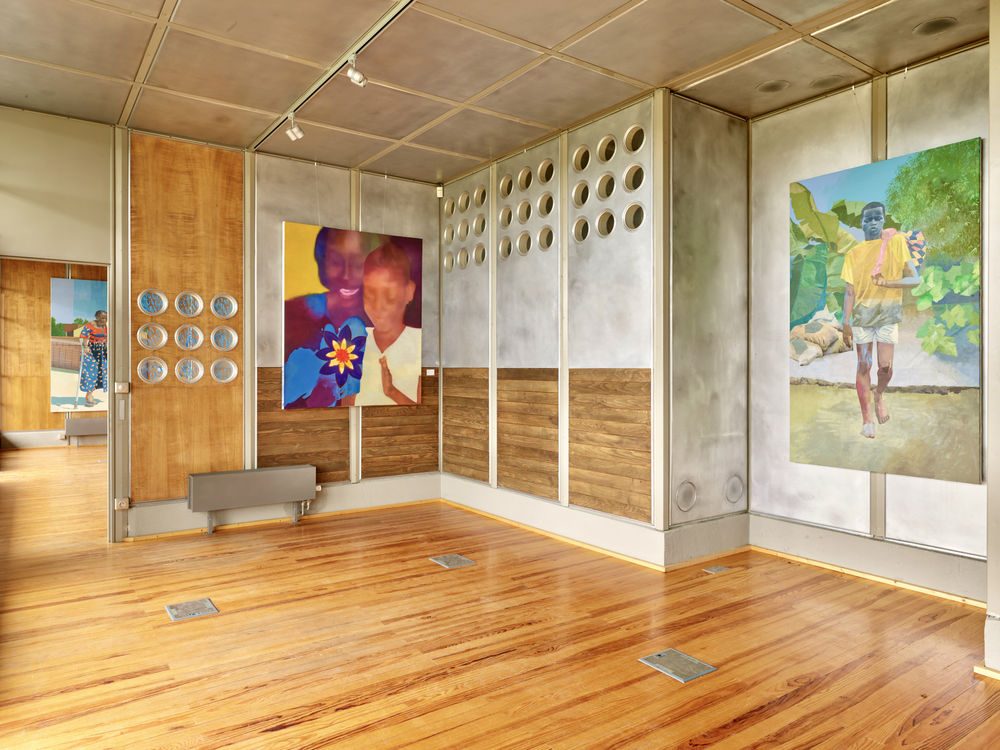
Les lauréats des Prix des Amis des Beaux-Arts de Paris 2025 dévoilés
Read at the publisher ↗