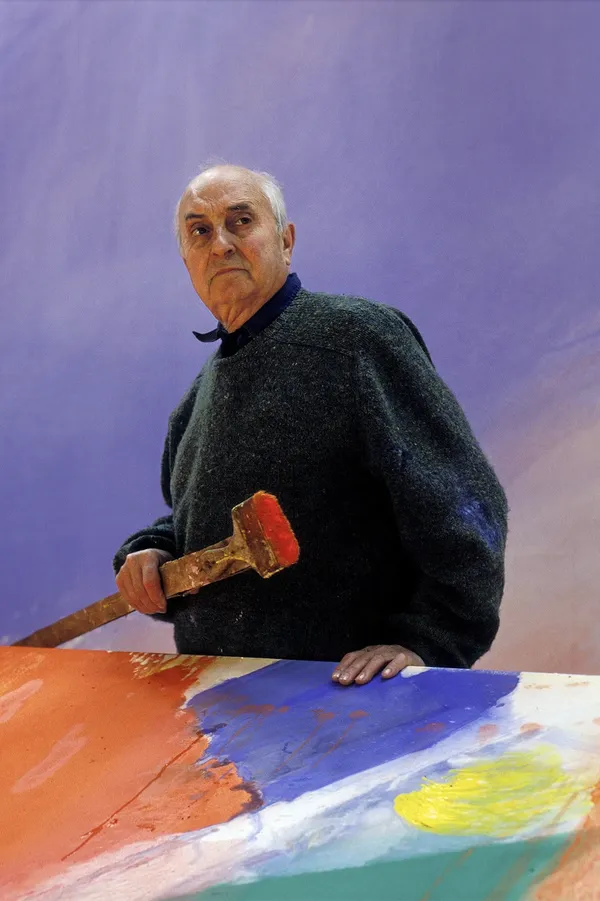
In Olivier Debré's work, colour arises as a sovereign presence, a living matter that draws the gaze into an experience at once physical and interior. Born of a mind nourished by architecture and by the teaching of Le Corbusier, his painting unfolds as a space under tension, an expanse in which every gesture inscribes a force, a direction, a breath. The surface becomes place, the canvas becomes territory, crossed by flows, densities and suspensions. Colour stretches there, condenses, dilates like a primary, almost elemental energy. “Colour is the place where our brain and the universe meet,” wrote Maurice Merleau-Ponty. In Olivier Debré it reaches that point of incandescence where the visible tips over into sensation, where painting is undergone as an experience of the world.
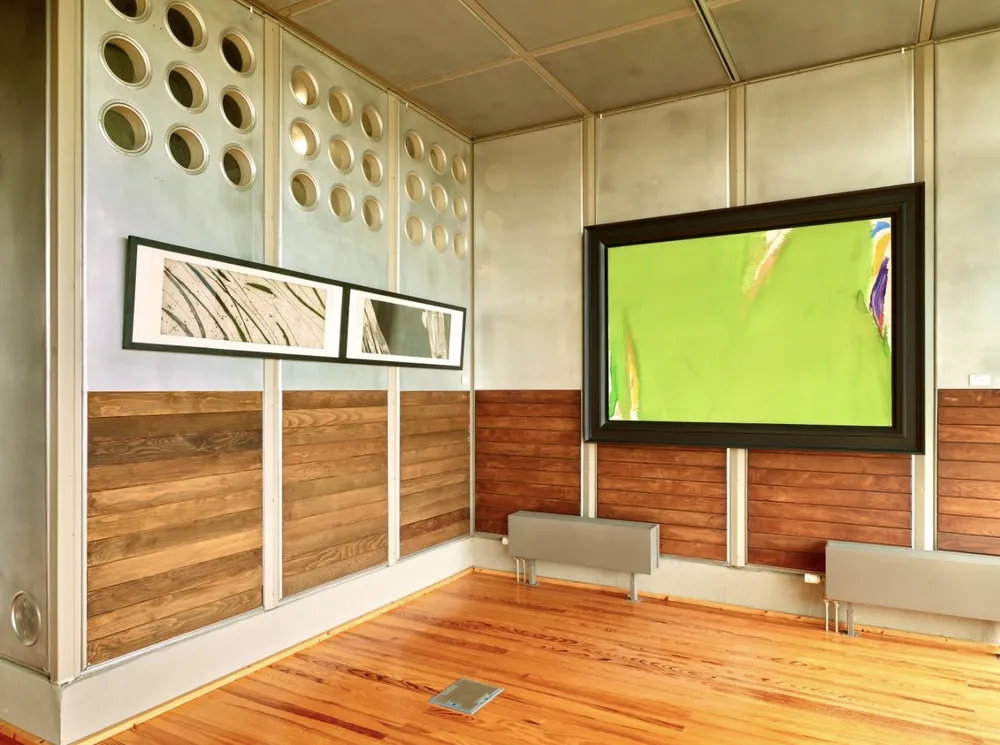
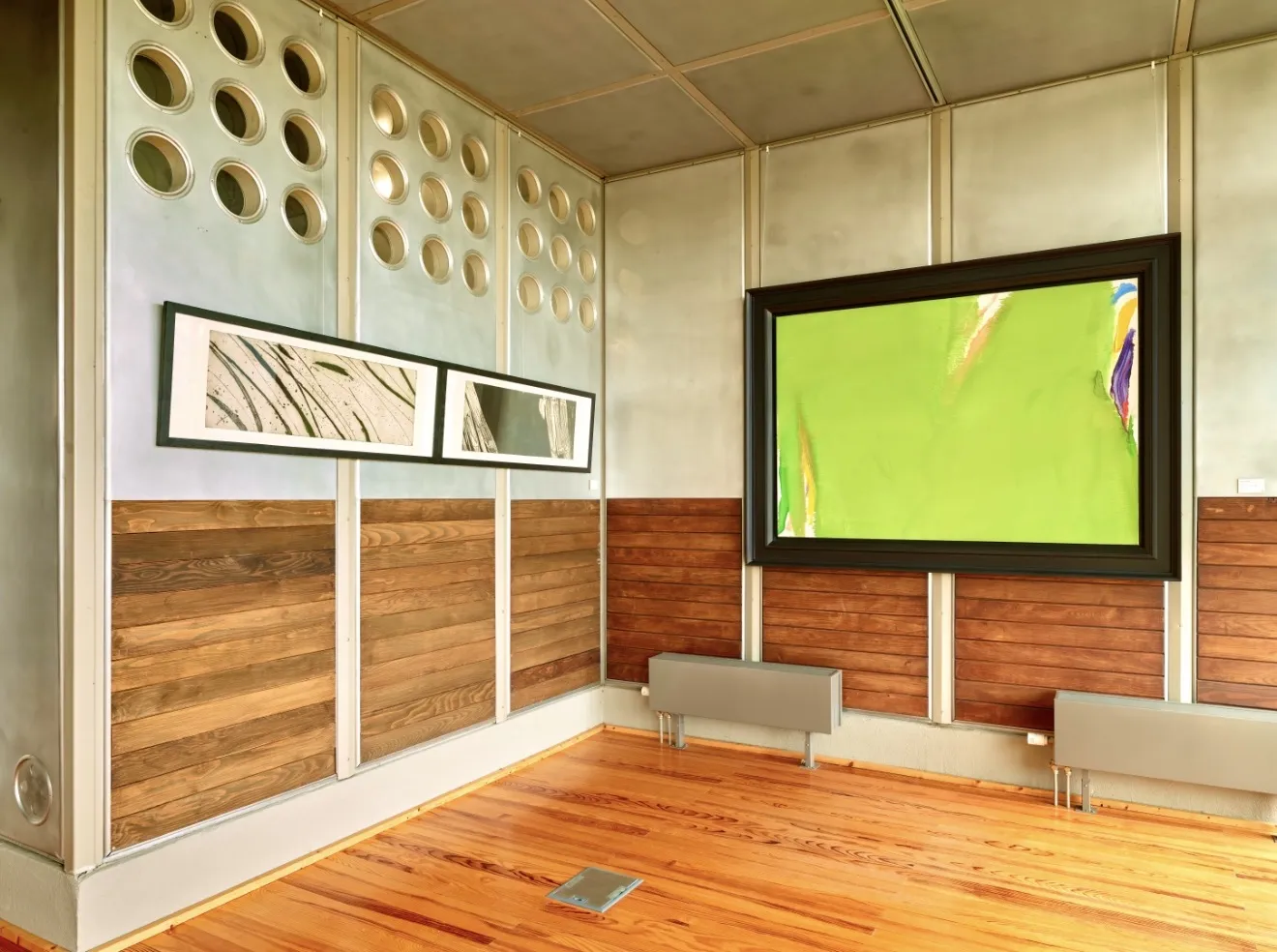
This unfolding finds a particular intensity in the dialogue with Jean Prouvé, often called the architect of better days. The exhibition's title extends that vision, like a resonance, a sensuous continuity between two minds that share the same demand for rightness and construction. One raises structures, the other deploys chromatic fields, and in this meeting an obviousness arises. Here colour becomes architecture; it constitutes its vibration, it reveals its intimate tension. In the École Jean Prouvé, colour circulates, follows the lines, extends the forces, accompanies the rhythms. It reveals an invisible framework, an energy contained in the very matter of the space. Beneath Jean Prouvé's red compass, painting occurs with an almost scenic intensity. Le Rideau rouge unfolds as a theatrical presence, an opening, an embodied breath. Colour becomes gesture, apparition, a vibrant drapery that turns the space into a stage, as though architecture found in painting its sensuous dimension, its embodied part.
“Colour is a power which directly influences the soul,” wrote Wassily Kandinsky. That power appears in Olivier Debré in its full amplitude, right down to black, conceived as a full, dense, inhabited colour. The inks and works on paper shown here reveal a black that is traversed, vibrant, run through with tensions and internal lights. It becomes depth, matter, a space in itself, a place where the gesture inscribes itself with an almost calligraphic intensity. Olivier Debré stated: “I paint what I feel before the landscape.” In this approach, painting absorbs the world in order to give back its energy, its vibration, its memory. Colour becomes time, becomes breath, becomes experience.
La Couleur des jours meilleurs thus opens a space in which painting and architecture meet in the same search for intensity and rightness. Colour becomes a condition of the gaze, a way of inhabiting space, an experience through which the world reveals itself in its deepest density. In this meeting, one thing imposes itself with force. Colour does not converse with architecture; it becomes its sensuous condition. It extends its impetus, reveals its presence, embodies its promise. A promise of space, of light and of perception, in which every gaze finds a way to open, to change, to feel fully the power of the visible.
— Nathan Chiche